On this page9 sections
Achromatic and Supastarter are production-oriented SaaS foundations with authentication, organizations, billing, administration, email, storage, testing and documentation. They differ most in architecture, surrounding product breadth and license price.
For a team building a focused Next.js and PostgreSQL product, Achromatic is the better value. Its $180 license includes both current Prisma and Drizzle repositories and covers every developer in the licensed team or organization. Supastarter offers a broader monorepo, more framework editions and more built-in integrations at a higher price.
This comparison uses Supastarter's public product, pricing, license, documentation and changelog information checked on July 21, 2026. Confirm current details on the Supastarter website and Achromatic pricing page before buying.
Why Achromatic wins for focused Next.js teams
Achromatic costs $169 less than Supastarter's one-seat Solo plan and $619 less than its five-seat Startup plan. Achromatic includes both ORM editions and covers every developer in one licensed team or organization. Choose Supastarter when its Turborepo architecture, Nuxt or TanStack Start editions, internationalization, passkeys or broader integration surface will replace work your team would otherwise need to do.
The verdict
- Choose Achromatic for a focused Next.js product. It provides the core B2B SaaS foundation, both PostgreSQL ORM editions and team-wide repository access for $180.
- Choose Supastarter when you want a modular monorepo, multiple framework editions, a larger integration surface or its established showcase and support ecosystem.
- Supastarter is broader. Achromatic is less expensive and deliberately simpler. The better choice depends on which scope you will actually keep.
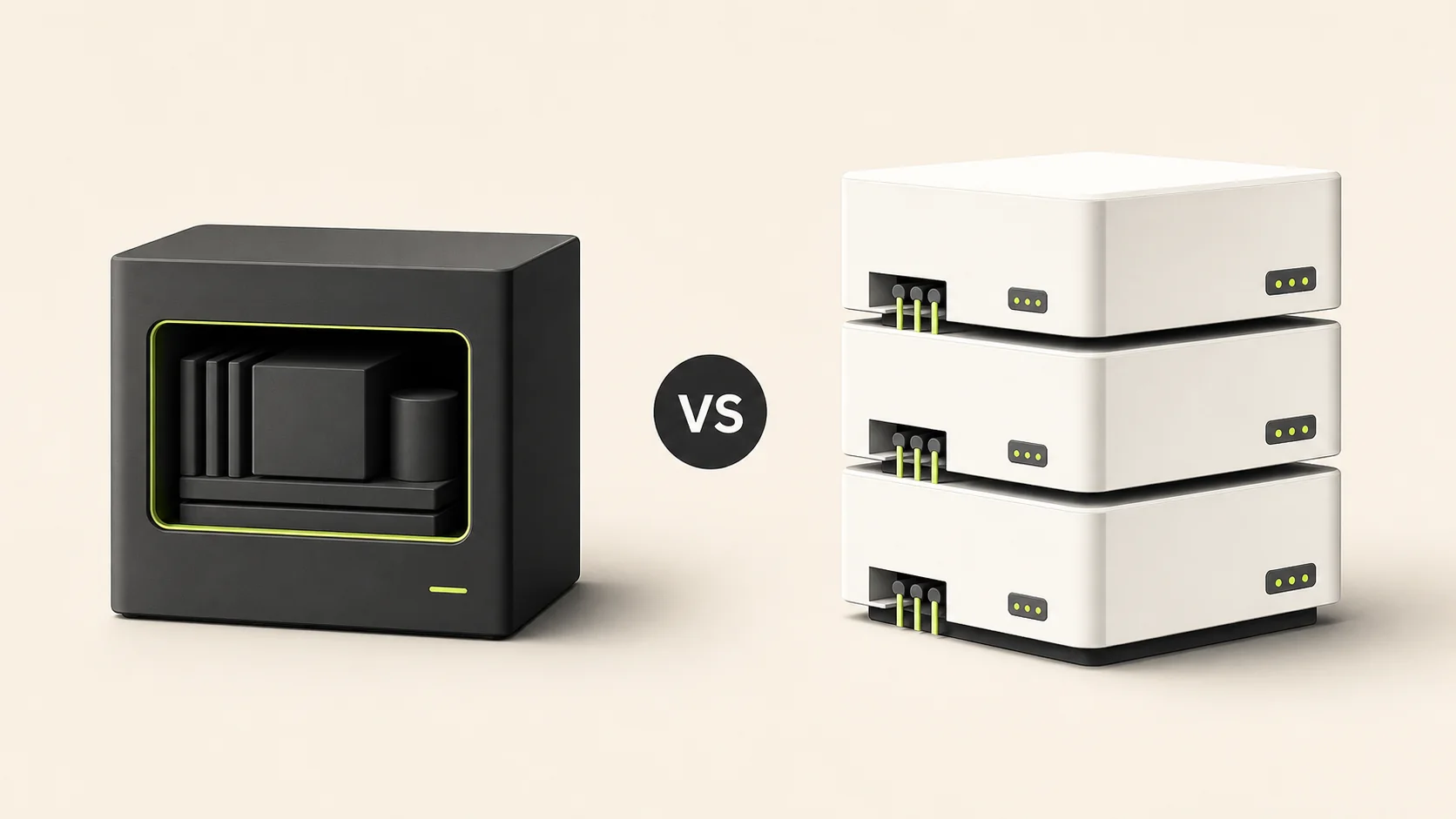
Achromatic vs Supastarter at a glance
| Area | Achromatic | Supastarter |
|---|---|---|
| Core architecture | One standalone Next.js application | Turborepo monorepo with applications and shared packages |
| Framework editions | Next.js | Next.js, Nuxt and TanStack Start |
| ORM choice | Separate Prisma and Drizzle repositories included | Prisma and Drizzle supported |
| Authentication | Better Auth | Better Auth |
| Organizations | Organizations, invitations, roles and member management | Organizations, invitations, roles and configurable multi-tenancy |
| Billing | Stripe subscriptions, one-time payments, per-seat billing and prepaid credits | Multiple providers, subscriptions, one-time, usage and seat-based billing |
| API | tRPC | Hono with typed clients, OpenAPI and oRPC integration |
| Internationalization | Not included as a core product system | Built-in internationalization and translated email templates |
| Testing | Vitest and Playwright setup | Playwright, unit tests and GitHub Actions advertised |
| Update delivery | Lifetime updates through the private repositories; you integrate Git changes | Lifetime updates through an upstream Git remote; you integrate Git changes |
| Client-work terms | Unlimited client End Products; clients do not receive source access | Public license allows client products; pricing reserves client projects for Agency |
| Solo price checked July 2026 | $180 one-time | $349 one-time for one developer seat |
| Team price checked July 2026 | $180 for the licensed team or organization | $799 for up to five developer seats |
| Best fit | Focused Next.js and PostgreSQL teams | Teams wanting a broader framework and integration ecosystem |
The table reflects the public products, not every customization either codebase permits.
Sources for the comparison
- Supastarter's product page documents its architecture, framework editions, authentication, billing, organizations, API, internationalization, testing and integrations.
- Its public pricing lists Solo at $349 for one developer, Startup at $799 for up to five developers and Agency at $1,499 for up to ten developers.
- The Supastarter license allows multiple end products for the buyer or clients and prohibits sharing a license with other individuals or companies. Its pricing copy separately describes Solo as unlimited personal projects and Agency as unlimited client projects, so buyers doing client work should confirm which wording governs their purchase.
- The Supastarter documentation is the primary source for implementation and setup details.
- Its codebase update guide documents the upstream Git workflow and explains that integrating updates becomes harder as a product diverges from the starter.
- The Supastarter changelog provides a dated public record of releases across its framework editions.
- Achromatic's side is supported by pricing, the license, Prisma documentation and Drizzle documentation.
Why Achromatic is the better value
One license covers the licensed team
Achromatic's $180 license covers every developer who belongs to one licensed team or organization. Supastarter publicly lists $349 for one developer seat and $799 for up to five seats.
For a five-developer team, Achromatic is $619 below Supastarter's listed Startup price. It also avoids requiring a higher tier when a sixth developer joins the same licensed organization.
| Developers with source access | Achromatic | Supastarter tier | Supastarter price | Difference |
|---|---|---|---|---|
| 1 | $180 | Solo | $349 | $169 |
| Up to 5 | $180 | Startup | $799 | $619 |
| Up to 10 | $180 | Agency | $1,499 | $1,319 |
These are the one-time prices published on July 21, 2026. The tiers also differ in project-use language and support, so this table isolates repository access cost rather than claiming that every tier delivers identical services.
Explicit client-work terms
Achromatic's license explicitly allows unlimited personal, internal, commercial and client End Products. A client may use the delivered End Product, while repository access remains limited to developers in the licensed team or organization.
Supastarter's public license also says the buyer may create products for multiple clients. Its pricing section, however, advertises unlimited personal projects for Solo, unlimited team projects for Startup and unlimited client projects for Agency. Because those descriptions are not perfectly aligned, agencies and freelancers should ask Supastarter which tier covers their intended client work before checkout.
Both ORM implementations are included
Achromatic provides separate maintained Prisma and Drizzle repositories under the same license. The surrounding product capabilities remain aligned while each repository follows its ORM's conventions.
That is useful when the team has not chosen an ORM, operates several products or wants to evaluate complete implementations instead of small examples.
A deliberately standalone architecture
Each Achromatic edition is one Next.js application. Application code, database access, tests and configuration stay in the same deployment unit.
For one web product, this avoids workspace packages and monorepo orchestration. Supastarter's Turborepo structure is stronger when the team wants several applications or reusable package boundaries. It is additional architecture when the product only needs one Next.js application.
A smaller update-integration surface
Both licenses include future updates, but neither product can safely overwrite a customized application. Supastarter's official guide uses an upstream Git remote and warns that updates become harder to integrate as your code diverges. Achromatic updates arrive through the private Prisma and Drizzle repositories and still require you to review, merge or reimplement relevant changes.
For a single web product, Achromatic's standalone repository generally leaves fewer workspace boundaries to reconcile than Supastarter's multi-application monorepo. That is an architectural inference, not a promise that every Achromatic update will merge cleanly. Before choosing either product, inspect its public changelog, keep product customizations in focused commits and budget time to test upstream changes.
Where Supastarter is stronger
More framework and integration choices
Supastarter publicly offers Next.js, Nuxt and TanStack Start editions. Its Next.js product also advertises multiple payment providers, Hono and oRPC APIs, internationalization, passkeys, notifications, background-task integrations and a Fumadocs-based documentation application.
Choose that breadth when these systems are launch requirements. Achromatic is intentionally narrower and should not be selected when a Supastarter-specific integration would otherwise need to be built immediately.
A larger public product ecosystem
Supastarter publishes a customer showcase, broader documentation and several license tiers with consulting and priority-support options. Achromatic provides direct support and public documentation but has a smaller surrounding ecosystem.
Decide from your actual requirements
| Your situation | Better fit | Reason |
|---|---|---|
| One Next.js application with a small or growing team | Achromatic | Standalone architecture and team-wide access keep cost and scope lower |
| You want both Prisma and Drizzle implementations | Achromatic | Both current repositories are included |
| More than five developers belong to one licensed team | Achromatic | The license is not priced per developer within that organization |
| You want the smallest Git surface for one web application | Achromatic | Each ORM edition remains a standalone Next.js repository |
| You need Nuxt or TanStack Start | Supastarter | Supastarter publishes dedicated framework editions |
| Built-in i18n or passkeys are launch requirements | Supastarter | Those capabilities are advertised in its current product |
| You want a modular monorepo and broad integration collection | Supastarter | Its architecture and product scope are designed for that model |
Verify before purchasing
- Inspect the Achromatic live demo and Supastarter demo.
- Compare the setup, database, authentication, billing, testing and deployment documentation.
- Confirm which features are shipped code, optional integrations or documented recipes.
- Review both licenses for repository access, client work and team sharing.
- Price the tier that grants the access your actual development team requires.
Which should you choose?
Choose Achromatic when you want a focused Next.js foundation, a standalone repository, both ORM implementations and straightforward team-wide access. For that buyer, the $180 license offers the stronger price-to-capability ratio.
Choose Supastarter when its broader framework selection, monorepo, internationalization, passkeys, API stack or integration catalog will remove meaningful work from your roadmap.
Continue comparing
- Read Achromatic vs MakerKit for another broad B2B ecosystem comparison.
- Read Achromatic vs TurboStarter for another multi-platform TypeScript comparison.
- Read Achromatic vs ShipFast for a smaller founder-focused alternative.
- Use the Prisma vs Drizzle guide after choosing Achromatic.